Commercial Pilot Licence (CPL) in India: Eligibility, Fees, Training, Exams and Career Guide
What Is a Commercial Pilot Licence (CPL)?
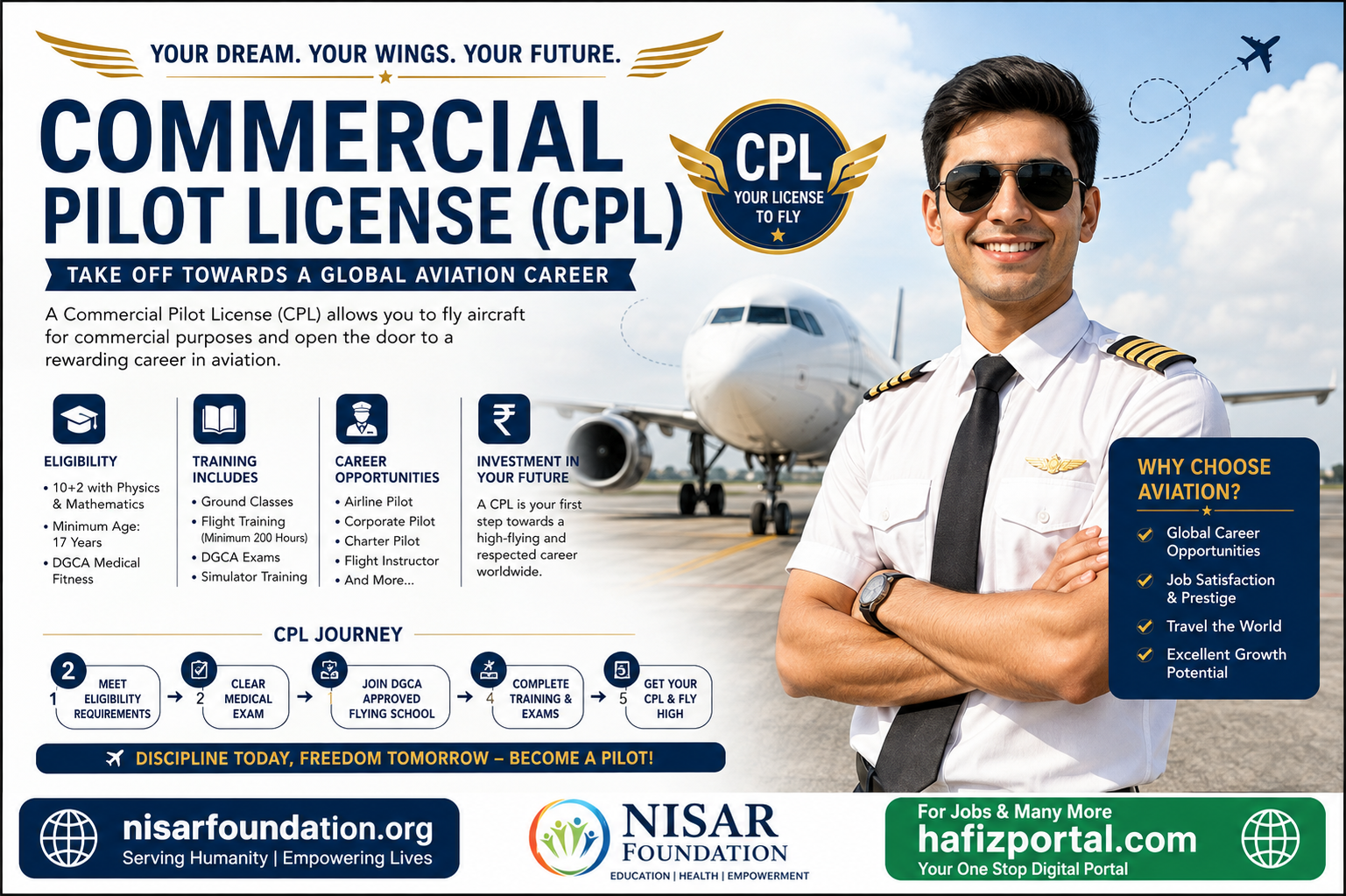
A Commercial Pilot Licence (CPL) is a professional pilot licence that allows a qualified pilot to fly aircraft for commercial purposes, subject to the applicable aircraft ratings, operational requirements and regulations.
In India, pilot licensing and flight crew standards are regulated by the Directorate General of Civil Aviation (DGCA). The DGCA publishes regulations, examination information, training requirements and information related to Flying Training Organisations (FTOs).
A CPL is an important step for students who want to build a career in commercial aviation. It can lead to opportunities in airlines, charter companies, aerial operations, flight instruction and other aviation-related roles.
However, getting a CPL does not automatically guarantee an airline pilot job. Airline recruitment may require additional qualifications such as instrument and multi-engine ratings, type rating, airline-specific training, medical fitness and successful completion of the airline’s selection process.
Who Should Consider CPL Training?
CPL training may be suitable for students who:
- Have a strong interest in aviation.
- Enjoy mathematics, science and technology.
- Can remain calm and focused under pressure.
- Have good communication skills.
- Are comfortable taking responsibility.
- Can follow safety procedures carefully.
- Are physically and medically fit for professional flying.
- Are prepared for significant training and education expenses.
Flying is not only about controlling an aircraft. A professional pilot must understand weather, navigation, aircraft systems, regulations, communication, emergency procedures and human factors.
Commercial Pilot Licence Eligibility in India
The exact requirements should always be checked against the latest DGCA rules before admission because aviation regulations can change.
For an aspiring Indian CPL candidate, the commonly applicable requirements include the following:
1. Educational Qualification
Candidates generally need 10+2 or equivalent education with Physics and Mathematics from a recognised board. DGCA-related documentation also references 10+2 with Physics and Mathematics for professional pilot qualifications.
Students who have not studied Physics and Mathematics may need to complete the required subjects through an accepted board or recognised pathway before proceeding.
2. Minimum Age
Professional pilot licensing has minimum-age requirements. Candidates should verify their age eligibility directly with DGCA before beginning the licensing process.
3. Medical Fitness
Medical fitness is one of the most important parts of a pilot career.
Aspiring pilots should complete the appropriate DGCA medical process before making a major financial commitment to flight training. DGCA provides information about medical examination and designated medical categories through its official portal.
Important tip: Do your medical assessment early. Spending a large amount on flight training before confirming medical eligibility can create unnecessary financial risk.
How to Get a Commercial Pilot Licence in India
The CPL journey generally involves several stages.
Step 1: Complete the Educational Requirements
Finish 10+2 with Physics and Mathematics or complete an accepted equivalent qualification.
Step 2: Complete the Required Medical Process
Undergo the appropriate DGCA medical examination and follow the applicable procedures.
Step 3: Register for DGCA Flight Crew Processes
DGCA’s official examination platform provides Flight Crew registration, examination information, schedules and related services.
Step 4: Join a DGCA-Approved Flying Training Organisation
Choose an FTO carefully. Do not select a flying school only because of its advertised fees.
DGCA publishes information and rankings concerning Flying Training Organisations. The current DGCA information includes multiple approved FTOs across India.
Before admission, compare:
- Aircraft fleet
- Aircraft availability
- Instructor strength
- Average monthly flying hours
- Maintenance arrangements
- Training completion record
- Weather conditions
- Airport congestion
- Accommodation
- Ground school
- Simulator facilities
- Safety record
- Refund policy
- Additional charges
Step 5: Complete Ground Training
CPL candidates study important aviation subjects such as:
- Air Navigation
- Aviation Meteorology
- Air Regulations
- Aircraft and Technical General
- Aircraft-specific technical subjects
- Radio communication
- Aviation English and communication requirements
DGCA publishes the examination syllabus for CPL and Instrument Rating.
Step 6: Pass the Required Examinations
Candidates must complete the applicable DGCA examination requirements. The official DGCA Pariksha portal provides examination calendars, syllabi, registration and Flight Crew examination information.
Step 7: Complete Flight Training
Flight training develops practical skills such as:
- Take-off and landing
- Aircraft handling
- Navigation
- Cross-country flying
- Emergency procedures
- Instrument flying
- Night flying
- Multi-engine operations where applicable
- Decision-making and cockpit discipline
For an Indian CPL, the commonly cited minimum total flight experience is 200 hours, with the required composition of those hours governed by the applicable DGCA regulations. Training may take longer than the minimum depending on weather, aircraft availability, student performance and other factors. Current training programmes in India also describe 200-hour CPL pathways, including multi-engine training.
Step 8: Complete the Licensing Process
After completing the required training, examinations, medical requirements and documentation, the candidate can proceed with the DGCA licensing process.
CPL Course Duration
The duration of CPL training is not identical for every student.
A well-organised programme may take around 18 to 24 months, but the actual duration can be shorter or longer.
Factors affecting completion time include:
- Weather
- Aircraft serviceability
- Instructor availability
- Airport traffic
- Student performance
- Examination schedules
- Medical requirements
- Flying-school capacity
- Number of available training aircraft
For example, some Indian aviation academies currently advertise CPL programmes of approximately 18 months, while integrated airline-oriented programmes can have different timelines.
CPL Course Fees in India
CPL training is a major financial investment.
The total cost can vary considerably depending on the flying school, location, aircraft, training duration, accommodation, simulator use, examination fees and additional training.
As a broad planning estimate, students may encounter total training expenses in the tens of lakhs of rupees, and some integrated or airline-focused programmes can cost substantially more.
Do not compare schools only by the headline course fee.
Ask for a written breakdown covering:
- Flying charges
- Ground classes
- Examination fees
- Medical expenses
- Accommodation
- Food
- Uniform
- Study material
- Simulator charges
- Aircraft landing charges
- Navigation charges
- DGCA-related fees
- Licence processing costs
- Multi-engine training
- Instrument Rating
- Additional flying hours
- Examination reattempts
Always request the latest official fee structure directly from the FTO before paying an admission amount.
What Subjects Are Studied in CPL Training?
CPL students need both theoretical knowledge and practical flying skills.
Important areas include:
Air Navigation
Students learn how to plan and conduct flights using charts, instruments, navigation systems and other aviation resources.
Aviation Meteorology
Pilots must understand weather conditions because weather directly affects flight safety and operations.
Air Regulations
Students learn aviation laws, operating procedures and regulatory requirements.
Technical Knowledge
This covers aircraft systems, engines, instruments, performance and operational limitations.
Radio Communication
Clear communication with Air Traffic Control is an essential pilot skill.
Aviation English
Professional pilots need effective English communication skills in aviation environments.
The DGCA CPL examination syllabus provides the formal subject framework for the applicable examinations.
CPL and Airline Pilot: What Is the Difference?
This is an important question for beginners.
A CPL is a professional pilot licence, but becoming an airline pilot usually requires additional steps.
A typical airline career pathway may look like:
10+2 with Physics & Mathematics → Medical → Ground Training → DGCA Examinations → Flight Training → CPL → Instrument/Multi-Engine Qualifications → Type Rating/airline training → Airline Selection → First Officer
The exact pathway varies by airline and programme.
For example, Air India’s current cadet pilot programme combines CPL training and subsequent type-rating training as part of its structured pathway.
Air India’s trainee pilot requirements also show that airline recruitment can specify particular licence, instrument, multi-engine and aircraft-related qualifications.
Career Options After CPL
A CPL can support several aviation career pathways.
Possible opportunities include:
- Commercial Airline Pilot
- Charter Pilot
- Corporate Aviation Pilot
- Flight Instructor, after obtaining the required instructor qualification
- Aerial Survey Pilot
- Aircraft Operations
- Aviation Training and Support Roles
- Specialised Aviation Operations
For an airline career, additional qualifications, experience and airline-specific selection requirements are normally involved.
Skills Needed to Become a Successful Pilot
A successful pilot needs more than good exam marks.
Important skills include:
- Discipline
- Situational awareness
- Decision-making
- Communication
- Teamwork
- Time management
- Technical understanding
- Emotional control
- Safety awareness
- Continuous learning
Aviation is a safety-sensitive profession. Professional pilots must follow procedures consistently and maintain their knowledge and skills throughout their careers.
How to Choose the Best Flying School for CPL
Before joining any FTO, make a comparison sheet.
Check:
1. DGCA approval: Verify the current status from official DGCA information.
2. Fleet size: More aircraft can potentially improve training availability, but fleet size alone does not guarantee faster completion.
3. Aircraft serviceability: Ask about aircraft availability and maintenance practices.
4. Training duration: Ask for the average time taken by recent batches.
5. Total cost: Get every expected charge in writing.
6. Instructor availability: Instructor shortages can affect training schedules.
7. Student feedback: Speak with current and former students.
8. Accommodation: Check the actual facilities and additional costs.
9. Safety and compliance: Give safety and regulatory compliance priority over marketing claims.
DGCA’s published FTO information and rankings can be used as an important starting point when comparing training organisations.
Is CPL a Good Career Option?
Yes, CPL can be an excellent career option for students who genuinely want to work in aviation and are prepared for the financial, academic and professional commitment.
However, it should not be treated as a shortcut to a high-paying airline job.
The aviation industry is competitive. Students should research the complete pathway, understand the total cost, confirm medical eligibility and compare training organisations before enrolling.
A realistic career plan is much better than choosing a flying school based only on advertisements promising a guaranteed airline job.
Important Official Links for CPL Aspirants
For accurate and updated information, always give priority to official sources:
- DGCA India: Directorate General of Civil Aviation (DGCA)
- DGCA Flight Crew Examinations: DGCA Pariksha Portal
- DGCA FTO Information: DGCA Training and Flying Training Organisation Information
- Ministry of Civil Aviation: Ministry of Civil Aviation, Government of India
Always verify the latest eligibility, examination, medical, training and licensing requirements on DGCA’s official website before making an admission or financial decision.
Frequently Asked Questions About Commercial Pilot Licence
What is CPL?
CPL stands for Commercial Pilot Licence. It is a professional pilot licence issued under the applicable aviation regulations.
Can I become a pilot after 12th?
Yes. Students who meet the applicable educational, medical, age, examination and training requirements can pursue professional pilot training after 12th.
Is Physics and Mathematics required for CPL?
For the standard Indian professional pilot pathway, 10+2 with Physics and Mathematics is an important educational requirement. Always verify the latest DGCA rules before admission.
How many flying hours are required for CPL in India?
The commonly applicable minimum total flight experience for an Indian CPL is 200 hours, subject to the detailed DGCA requirements regarding the composition of those hours.
How long does CPL training take?
Many programmes take around 18 to 24 months, but the actual duration depends on the training organisation, weather, aircraft availability, examinations and student progress.
Is CPL enough to become an airline pilot?
Not necessarily. Airline pilots may need additional qualifications such as Instrument Rating, Multi-Engine Rating, aircraft Type Rating and successful completion of airline selection and training requirements.
Is CPL training expensive?
Yes. Professional flight training requires a substantial financial investment. The total amount varies by FTO and by the services included in the programme.
Can CPL holders get jobs?
Yes, CPL holders can pursue aviation careers, but employment is competitive and a CPL alone does not guarantee an airline job.
Final Advice for Students
If becoming a pilot is your dream, start with medical eligibility and accurate information rather than immediately paying a large admission fee.
Complete your education, understand the DGCA requirements, compare approved training organisations, calculate the complete cost and learn about the airline recruitment pathway.
Most importantly, choose a flying school based on safety, regulatory compliance, training quality, aircraft availability, instructor strength and transparent fees.
A Commercial Pilot Licence can open the door to a rewarding aviation career, but becoming a professional airline pilot requires discipline, training, patience and continuous learning.
Quick CPL Checklist
- Complete 10+2 with the required subjects.
- Check your medical eligibility.
- Understand the latest DGCA requirements.
- Register for applicable DGCA processes and examinations.
- Compare DGCA-approved FTOs.
- Check the complete course fee.
- Complete ground training.
- Pass the required examinations.
- Complete the required flight training.
- Obtain the applicable CPL and ratings.
- Prepare for airline or other aviation career opportunities.
- Check additional requirements for every airline before applying.