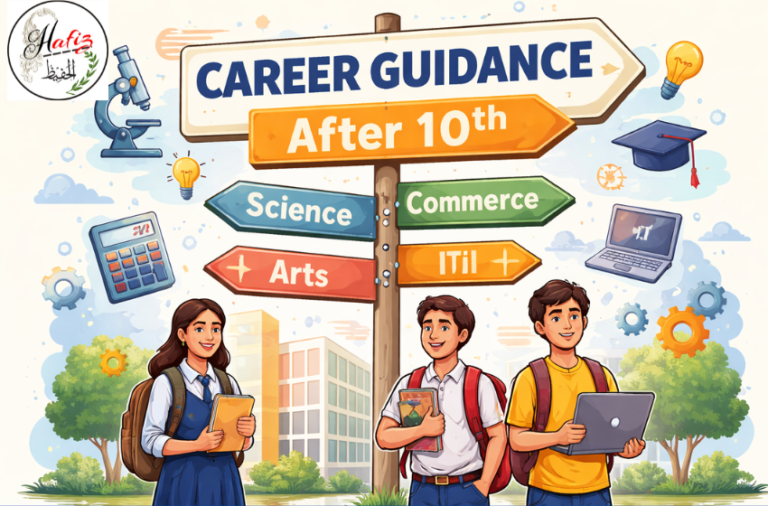
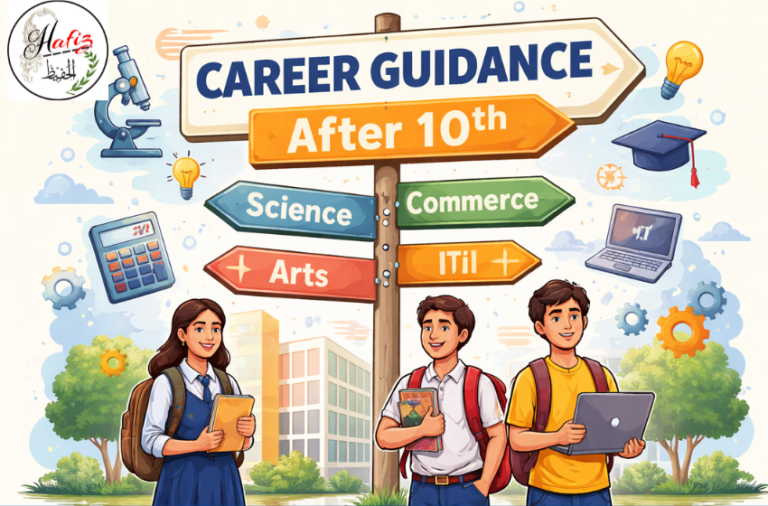
Career Guidance After 10th: B.E. & B.Tech Courses and Careers
Career Guidance After 10th: B.E. and B.Tech Courses, Branches and Career Options
Introduction: How to Plan an Engineering Career After 10th
Engineering is one of the most popular career pathways for students interested in technology, science, mathematics, machines, construction, computers and problem-solving.
However, an engineering career does not begin directly with a B.E. or B.Tech degree after Class 10. Students normally need to complete the required school education or an eligible diploma pathway before entering an undergraduate engineering program.
For students planning an engineering career, the decision made after Class 10 can be important.
A common academic route is:
10th → Class 11 & 12 with appropriate subjects → Engineering Entrance/Admission → B.E./B.Tech → Career or Higher Studies
Another route available in many parts of India is:
10th → Engineering Diploma/Polytechnic → B.E./B.Tech through an applicable admission or lateral-entry route
The exact eligibility, entrance examination and admission rules vary by state, university and institution. Students should always check the latest official admission notification before making a decision.
This article explains:
- Which stream to choose after 10th for engineering
- Importance of Physics, Chemistry and Mathematics
- Polytechnic diploma after 10th
- B.E. and B.Tech options
- Computer Science Engineering
- Information Technology
- Artificial Intelligence
- Data Science
- Mechanical Engineering
- Civil Engineering
- Electrical Engineering
- Electronics and Communication
- Robotics
- Aerospace
- Environmental Engineering
- Food Technology
- Career options after engineering
- Engineering career roadmap
- Entrance examinations
- Skills required for engineering
- FAQs for students and parents
Which Stream Should You Choose After 10th for Engineering?
For many B.E. and B.Tech programs, students need to complete Class 12 with the subjects specified by the institution and applicable admission rules.
For a large number of engineering pathways, Physics and Mathematics are important eligibility subjects, often accompanied by Chemistry or another approved subject.
The commonly known combination is:
Physics + Chemistry + Mathematics (PCM)
Students planning engineering should therefore carefully examine the subject requirements of their target course before selecting their Class 11 stream.
Why Mathematics Is Important for Engineering
Mathematics is an important foundation for many engineering disciplines.
It helps students develop:
- Logical thinking
- Analytical reasoning
- Problem-solving
- Numerical ability
- Pattern recognition
- Mathematical modelling
- Quantitative thinking
Engineering courses can involve mathematics in areas such as:
- Calculus
- Algebra
- Statistics
- Probability
- Differential equations
- Numerical methods
The amount and type of mathematics varies between engineering branches.
For example, mathematics can be used in computer science, electrical engineering, mechanical engineering, civil engineering, electronics and many other fields.
Why Physics Is Important for Engineering
Physics helps students understand how the physical world works.
Depending on the engineering branch, students may apply concepts related to:
- Motion
- Energy
- Electricity
- Magnetism
- Mechanics
- Waves
- Thermodynamics
- Materials
Physics can be especially relevant to mechanical, electrical, electronics, civil, aerospace and other engineering disciplines.
Is Chemistry Important for Engineering?
Chemistry is included in many Class 11–12 PCM combinations and can be part of engineering admission requirements.
It is particularly relevant to fields such as:
- Chemical engineering
- Materials engineering
- Environmental engineering
- Biotechnology-related engineering
- Food technology
- Petroleum-related fields
However, admission requirements vary by program and institution.
Two Major Routes to Engineering After 10th
After Class 10, students interested in engineering can broadly consider two pathways.
Route 1: Class 11 and 12 With Required Subjects
This is the traditional academic route.
10th → 11th & 12th → Entrance/Admission → B.E./B.Tech
This route can suit students who want to prepare academically for engineering entrance examinations and undergraduate study.
Route 2: Engineering Diploma After 10th
Students can explore polytechnic or engineering diploma programs after Class 10.
10th → Polytechnic Diploma → Employment or Further Study → B.E./B.Tech where eligible
Diploma admission and lateral-entry rules vary across states and institutions.
Engineering Diploma After 10th
A polytechnic diploma can provide practical and technical education.
Students may spend significant time learning through:
- Laboratories
- Workshops
- Technical drawing
- Practical assignments
- Projects
- Industry-oriented subjects
The exact curriculum depends on the diploma branch.
Popular Diploma Engineering Branches
Students may find diploma programs in areas such as:
- Mechanical Engineering
- Civil Engineering
- Electrical Engineering
- Electronics Engineering
- Computer Engineering
- Information Technology
- Automobile Engineering
- Chemical Engineering
Availability varies by state and institute.
Mechanical Engineering Diploma
Mechanical engineering focuses on machines, manufacturing and mechanical systems.
Students may learn about:
- Engineering drawing
- Mechanics
- Manufacturing
- Thermodynamics
- Machines
- Materials
- Computer-aided design
- Production processes
Possible career directions include:
- Mechanical technician
- Production technician
- Maintenance technician
- CAD-related roles
- Manufacturing roles
Students can later pursue higher education where eligible.
Civil Engineering Diploma
Civil engineering focuses on construction and infrastructure.
Students may study:
- Building construction
- Surveying
- Structural concepts
- Construction materials
- Roads
- Water resources
- Estimation
- Computer-aided design
Possible career areas include:
- Construction
- Infrastructure
- Site supervision
- Surveying
- Drafting
- Project support
Computer Engineering and IT Diploma
Students interested in computers can explore diploma programs in computer engineering or information technology.
Subjects may include:
- Programming
- Database systems
- Computer networks
- Web technology
- Software development
- Operating systems
- Computer hardware
This can provide a foundation for further study or entry-level technical work.
Diploma vs Class 11–12: Which Should You Choose?
Both pathways have advantages and limitations.
| Factor | Class 11–12 Route | Diploma Route |
|---|---|---|
| Learning style | More academic | More practical/technical |
| Main stage | School education | Polytechnic education |
| Engineering entry | Usually after Class 12 | Possible through applicable diploma pathways |
| Entrance preparation | Can align with engineering entrance exams | Depends on the later admission route |
| Practical exposure | Depends on school and activities | Usually greater technical exposure |
| Higher education | Broad options after 12th | Further study subject to eligibility |
There is no universal “better” route.
Students should consider:
- Academic interests
- Mathematics ability
- Financial situation
- Preferred learning style
- State admission rules
- Long-term education plans
B.E. and B.Tech: What Is the Difference?
B.E. stands for Bachelor of Engineering.
B.Tech stands for Bachelor of Technology.
Both are undergraduate engineering degrees. The exact curriculum and academic structure depend on the university or institution.
In practical career terms, students should focus on:
- Institution quality
- Accreditation and recognition
- Curriculum
- Laboratory facilities
- Internship opportunities
- Faculty
- Industry exposure
- Placement information
- Fees
- Location
- Higher-study opportunities
Do not choose a college only because of its advertised placement package.
Popular B.E. and B.Tech Engineering Branches
Engineering has many specializations.
Some are traditional branches, while others focus on newer technologies.
1. Computer Science and Engineering
Computer Science Engineering (CSE) is focused on computing, software and information systems.
Students may study:
- Programming
- Data structures
- Algorithms
- Database management
- Operating systems
- Computer networks
- Software engineering
- Artificial intelligence
- Machine learning
- Computer architecture
Possible career roles
- Software developer
- Software engineer
- Backend developer
- Front-end developer
- Full-stack developer
- Systems engineer
- Application developer
2. Information Technology
Information Technology focuses on applying computing systems and digital technologies to organizational and business needs.
Students may learn:
- Programming
- Databases
- Networks
- Web technologies
- Software engineering
- Information security
- Cloud technologies
Possible career directions include:
- IT engineer
- Software developer
- System administrator
- Network professional
- Database professional
- IT support specialist
3. Artificial Intelligence and Machine Learning
AI and ML programs focus on intelligent systems and data-driven computing.
Students may study:
- Programming
- Statistics
- Data structures
- Algorithms
- Machine learning
- Deep learning
- Data processing
- Artificial intelligence
Possible career directions include:
- AI engineer
- Machine learning engineer
- Data scientist
- AI software developer
- Research roles
These fields generally require strong programming and mathematical foundations.
4. Data Science and Data Engineering
Data-focused programs deal with collecting, processing, analyzing and interpreting data.
Students may learn:
- Statistics
- Python
- Databases
- Data visualization
- Machine learning
- Data processing
- Data engineering
Possible roles include:
- Data analyst
- Data scientist
- Data engineer
- Business intelligence professional
5. Electronics and Communication Engineering
Electronics and Communication Engineering (ECE) covers electronics, communication systems and related technologies.
Students may study:
- Digital electronics
- Analog electronics
- Communication systems
- Microprocessors
- Embedded systems
- Signal processing
- Semiconductor-related concepts
Career areas include:
- Electronics
- Telecommunications
- Embedded systems
- Semiconductor industry
- Hardware
- Networking
- Research and development
6. Mechanical Engineering
Mechanical engineering is one of the traditional engineering branches.
It involves:
- Machines
- Manufacturing
- Mechanics
- Thermodynamics
- Materials
- Production
- Design
- Automation
Possible career areas include:
- Manufacturing
- Automotive
- Production
- Maintenance
- Design
- Quality
- Automation
7. Civil Engineering
Civil engineering deals with infrastructure and the built environment.
It can include:
- Buildings
- Roads
- Bridges
- Water systems
- Transportation
- Construction
- Structural engineering
- Geotechnical engineering
Possible roles include:
- Civil engineer
- Site engineer
- Structural engineering roles
- Project engineer
- Construction professional
- Quantity-related roles
8. Electrical Engineering
Electrical engineering deals with electrical systems and power-related technologies.
Students may study:
- Electrical circuits
- Power systems
- Electrical machines
- Control systems
- Electronics
- Renewable energy
- Electrical safety
Career areas include:
- Power systems
- Manufacturing
- Electrical design
- Renewable energy
- Automation
- Industrial systems
9. Robotics Engineering
Robotics combines multiple areas of engineering and computing.
Students may work with:
- Mechanical systems
- Electronics
- Sensors
- Control systems
- Programming
- Automation
- Artificial intelligence
Possible career areas include:
- Robotics
- Industrial automation
- Embedded systems
- Manufacturing
- Research
10. Aerospace Engineering
Aerospace engineering focuses on aircraft and spacecraft-related technology.
Students may study:
- Aerodynamics
- Aircraft structures
- Propulsion
- Flight mechanics
- Materials
- Control systems
Career opportunities can exist in aviation, aerospace manufacturing, research and related engineering organizations, subject to qualifications and recruitment requirements.
11. Environmental Engineering
Environmental engineering applies engineering principles to environmental challenges.
Students may work on:
- Water treatment
- Waste management
- Pollution control
- Environmental monitoring
- Sustainable systems
- Resource management
Possible career areas include:
- Environmental consulting
- Water management
- Waste management
- Industrial environmental compliance
- Research
12. Food Technology
Food technology combines science and engineering with food processing and manufacturing.
Students may study:
- Food processing
- Food safety
- Quality control
- Packaging
- Food microbiology
- Production systems
Career areas include:
- Food processing
- Quality assurance
- Product development
- Food safety
- Manufacturing
How to Choose the Right Engineering Branch
Do not select an engineering branch only because someone says it has the “highest salary.”
Instead, consider the following.
1. Your Interest
Ask yourself:
- Do I enjoy coding?
- Do I like machines?
- Do I enjoy mathematics?
- Do I like electronics?
- Am I interested in construction?
- Do I enjoy chemistry and materials?
- Do I like research?
Your answers can help narrow your options.
2. Your Strengths
Different branches use different skills.
For example:
CSE: Programming and logical thinking
Mechanical: Mathematics, mechanics and design
Civil: Mathematics, structures and construction concepts
Electrical: Mathematics, circuits and systems
ECE: Electronics, mathematics and communication systems
AI/Data: Mathematics, statistics and programming
Engineering Entrance Examinations in India
Engineering admission can happen through different routes.
One important national-level examination is JEE Main, conducted by the National Testing Agency.
Students should verify current eligibility, subjects, examination pattern, dates and participating institutions through the official website.
Some institutes and states also conduct or use their own admission processes.
For example, Maharashtra students should check the current official admission information from the State Common Entrance Test Cell.
Maharashtra State CET Cell – Official Website
Admission rules can change from year to year, so students should not rely only on older articles or social media posts.
Important Steps Before Choosing an Engineering College
Before admission, students and parents should compare:
Recognition and Approval
Check whether the institution and program have the required recognition or approval.
Course Curriculum
Read the actual syllabus.
Faculty
Look at the qualifications and experience of teaching staff.
Laboratories
Engineering is practical, so laboratory facilities matter.
Internships
Check whether students receive opportunities for internships or industry projects.
Placement Information
Do not look only at the highest advertised salary.
Check:
- Number of students placed
- Number of students eligible
- Median or average information where available
- Recruiting companies
- Job roles
- Internship opportunities
Total Cost
Calculate:
- Tuition fees
- Hostel
- Transport
- Books
- Equipment
- Examination fees
- Other institutional charges
Skills Every Engineering Student Should Develop
A degree is only one part of an engineering career.
Students should develop practical skills alongside academics.
Technical Skills
Depending on the branch, learn:
- Programming
- CAD
- Simulation tools
- Data analysis
- Electronics
- Technical drawing
- Engineering software
- Laboratory methods
Problem-Solving
Engineering is fundamentally connected with solving practical problems.
Students should practice breaking large problems into smaller steps.
Communication
Engineers often work with different departments and teams.
Communication skills help with:
- Presentations
- Reports
- Meetings
- Interviews
- Client discussions
Teamwork
Most professional engineering projects involve teams.
Learn how to:
- Share responsibilities
- Document work
- Give feedback
- Meet deadlines
Build Projects During Engineering
Projects can help students apply classroom knowledge.
Computer Science Projects
- Website
- Mobile application
- Database project
- Automation tool
- Machine learning project
- Cybersecurity lab
Mechanical Projects
- CAD model
- Automation project
- Prototype
- Manufacturing project
Civil Projects
- Structural model
- Surveying project
- Building design
- Water-management project
Electrical Projects
- Control system
- Renewable energy project
- Circuit project
- Automation project
Electronics Projects
- Embedded system
- IoT device
- Sensor project
- Communication project
The project should demonstrate what the student actually learned.
Internships and Industry Exposure
Students should consider internships when they become eligible.
An internship can help students understand:
- Workplace expectations
- Professional communication
- Teamwork
- Project management
- Industry tools
- Real-world engineering problems
Students should verify the organization, internship terms and eligibility before accepting an opportunity.
Career Options After B.E. and B.Tech
Engineering graduates can move into many areas depending on their branch and skills.
Technology Careers
Possible roles include:
- Software engineer
- Software developer
- Data analyst
- Data scientist
- AI engineer
- Cloud engineer
- Cybersecurity analyst
- Database professional
- Network engineer
- QA engineer
Core Engineering Careers
Possible roles include:
- Mechanical engineer
- Civil engineer
- Electrical engineer
- Electronics engineer
- Production engineer
- Design engineer
- Quality engineer
- Site engineer
- Maintenance engineer
Research and Development
Students interested in innovation can explore:
- Research assistant roles
- R&D engineering
- Laboratory work
- Product development
- Academic research
Higher education may be useful or required for some research-oriented positions.
Higher Studies After B.E. or B.Tech
Engineering graduates can consider several higher-study pathways.
M.Tech / M.E.
These postgraduate degrees can provide deeper specialization.
MBA
Engineering graduates may also pursue management education in areas such as:
- Finance
- Marketing
- Operations
- Business analytics
- Technology management
- Supply chain
MS
Students may pursue postgraduate education in India or abroad, subject to admission requirements.
PhD
Students interested in research and academic careers can consider doctoral education.
Government and Public-Sector Career Opportunities
Engineering graduates may also explore government and public-sector recruitment.
Depending on the organization and recruitment rules, opportunities can occur in areas such as:
- Engineering services
- Public works
- Railways
- Defence-related organizations
- Power sector
- State government departments
- Public-sector organizations
- Research organizations
Eligibility and recruitment procedures vary, so candidates should check the official notification for each vacancy.
Engineering Career Roadmap After 10th
Roadmap 1: Traditional Engineering Route
10th
↓
11th–12th with required subjects, commonly PCM
↓
Engineering Entrance/Admission
↓
B.E./B.Tech
↓
Internship + Projects
↓
Job / Higher Studies
Roadmap 2: Polytechnic Route
10th
↓
Engineering Diploma
↓
Work or Further Education
↓
Applicable Lateral Entry / Engineering Admission
↓
B.E./B.Tech
↓
Career
The exact lateral-entry rules differ by state and institution.
Roadmap 3: Computer Technology Route
10th
↓
11th–12th
↓
B.Tech CSE/IT or relevant degree
↓
Programming + Projects
↓
Internship
↓
Software/IT Career
Roadmap 4: Core Engineering Route
10th
↓
11th–12th with required subjects
↓
B.E./B.Tech Mechanical/Civil/Electrical/ECE
↓
Projects + Internship
↓
Core Engineering Career
What Should Students Do From Class 10?
Students can start preparing early without putting unnecessary pressure on themselves.
Class 10
Focus on:
- Mathematics
- Science
- Logical reasoning
- Computer basics
- Communication
Class 11
Build a strong foundation in your selected subjects.
Class 12
Focus on:
- Board preparation
- Entrance examination preparation where applicable
- College research
- Career planning
During Engineering
Focus on:
- Technical skills
- Projects
- Internships
- Communication
- Networking
- Resume
- Portfolio
- Placement preparation
Common Mistakes Engineering Aspirants Should Avoid
Choosing a Branch Only for Salary
Salary varies based on experience, skills, employer, location and economic conditions.
Selecting a College Without Research
Check recognition, curriculum, fees, facilities and placement information.
Ignoring Practical Skills
Engineering is not only about passing examinations.
Avoiding Internships
Practical exposure can help connect academic knowledge with industry work.
Learning Too Many Technologies
Develop a strong foundation before trying to learn everything.
Ignoring Communication
Engineers need to explain technical ideas clearly.
Frequently Asked Questions
Is PCM compulsory for engineering after 10th?
For many engineering degree pathways, Physics and Mathematics are required in the qualifying examination, with the third subject and other requirements varying by program and admission authority. Students should check the current eligibility rules of their target institution.
Can I do an engineering diploma after 10th?
Yes. Polytechnic and engineering diploma programs are available in many states and institutions for eligible Class 10 students.
Can I do B.Tech after a diploma?
In many cases, diploma holders can seek admission to engineering degree programs through applicable lateral-entry provisions. The exact rules vary by state, university and institution.
Is diploma better than Class 11 and 12?
Neither route is universally better. Diploma programs can provide more practical technical exposure, while Class 11 and 12 can provide a broader academic route and may align directly with engineering entrance examinations.
Which engineering branch has the highest demand?
Demand changes over time and differs by industry. Computer science, IT, AI, data-related fields, electronics and several core engineering disciplines can all offer career opportunities. Students should consider interest, skills and long-term goals rather than choosing a branch only because it is described as “high demand.”
Can I become a software engineer after engineering?
Yes. Students from CSE, IT and related programs commonly enter software careers, while graduates from other branches may also transition into software through programming and additional technical training.
Can mechanical engineers work in software?
Some mechanical engineering graduates transition into software and technology roles by developing programming, data or other relevant technical skills. The available roles and eligibility depend on the employer.
Can civil engineers work in government jobs?
Engineering graduates may be eligible for various government recruitment opportunities depending on the job notification, branch, qualification and applicable examination.
Can engineering graduates do an MBA?
Yes. Engineering graduates can apply for MBA programs if they meet the relevant admission requirements.
Can engineers go into research?
Yes. Engineering graduates can pursue research through higher education, R&D roles, laboratories, universities and research organizations, depending on qualifications.
What are emerging engineering fields?
Areas such as AI, robotics, renewable energy, environmental technology, semiconductor-related technology, aerospace, automation and advanced manufacturing continue to develop. Students should research the specific skills and education required for each field.
Final Conclusion
Planning an engineering career after Class 10 requires careful thinking about subjects, education pathways and long-term goals.
For many traditional engineering routes, students should consider Physics and Mathematics-based Class 11–12 education, while eligible students may also explore polytechnic diploma programs after Class 10.
After Class 12 or an eligible diploma route, students can explore B.E. and B.Tech programs in areas such as:
- Computer Science
- Information Technology
- AI and Machine Learning
- Data Science
- Electronics and Communication
- Mechanical Engineering
- Civil Engineering
- Electrical Engineering
- Robotics
- Aerospace
- Environmental Engineering
- Food Technology
The most important decision is not simply choosing the branch that appears popular. Students should understand the subjects involved, course eligibility, college quality, career possibilities and their own interests.
A strong engineering career is built through:
Good Education + Technical Skills + Projects + Internships + Communication + Continuous Learning
Students should verify current admission requirements through official sources before applying to any course or examination.
With careful planning and consistent learning, an engineering education can provide pathways into technology, infrastructure, manufacturing, research, management and many other professional fields.
Recommended Internal Links for HafizPortal
You can connect this article with your existing HafizPortal career guides:
- Career Guidance After 10th – IT Field
- Career Guidance After 10th – Design
- Engineering Courses and Specializations
- Career Options After 10th Science
- Career Options After 10th Arts
- Career Options After 10th Commerce
- Computer Science Career Guide
- AI and Machine Learning Career Guide
- Data Science Career Guide
- Polytechnic Courses After 10th
- Career Guidance After 10th
This creates a strong Engineering + Technology + Career Guidance internal-link cluster and helps visitors move naturally between related HafizPortal articles.